
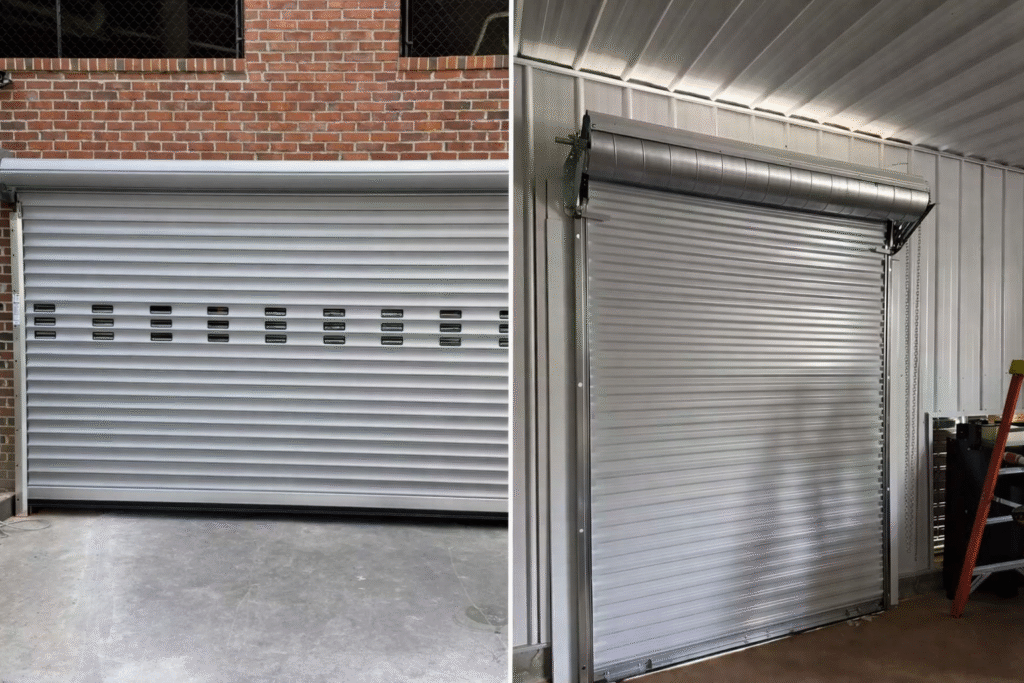
What’s the Difference Between Rolling Steel Doors and Rolling Sheet Doors?
If you’re considering installing a new commercial door in your warehouse or business, then you’ve probably heard of rolling steel doors and rolling sheet doors throughout your search. While these doors can look similar from a distance, the differences between rolling steel doors and rolling sheet doors can entirely change the performance of your business.
From the way these doors are constructed to how they perform daily operations, the differences between these doors aren’t always obvious, but they are still important to understand. Our experts at Aaron Dock & Door can help you determine which door is the perfect fit for your business in the Atlanta, GA area.
Below, we’ve listed out 5 common differences between rolling steel doors and rolling sheet doors so that you can make the best decision for your business!
Key Takeaways:
- Rolling sheet doors are made using a continuous corrugated steel sheet curtain, making these doors more cost-effective and best suited for lighter-duty operations.
- Rolling steel doors are created using interlocking slats that are designed to be much more durable and secure.
- Here in Atlanta, GA, high-traffic areas such as loading docks or warehouses, a rolling steel door is worth the investment. However, rolling sheet doors a a good solution for businesses on a budget and are best for lower-traffic areas. Regardless, there are numerous differences between rolling steel doors and rolling sheet doors.
The Curtain: Sheet Vs. Slats
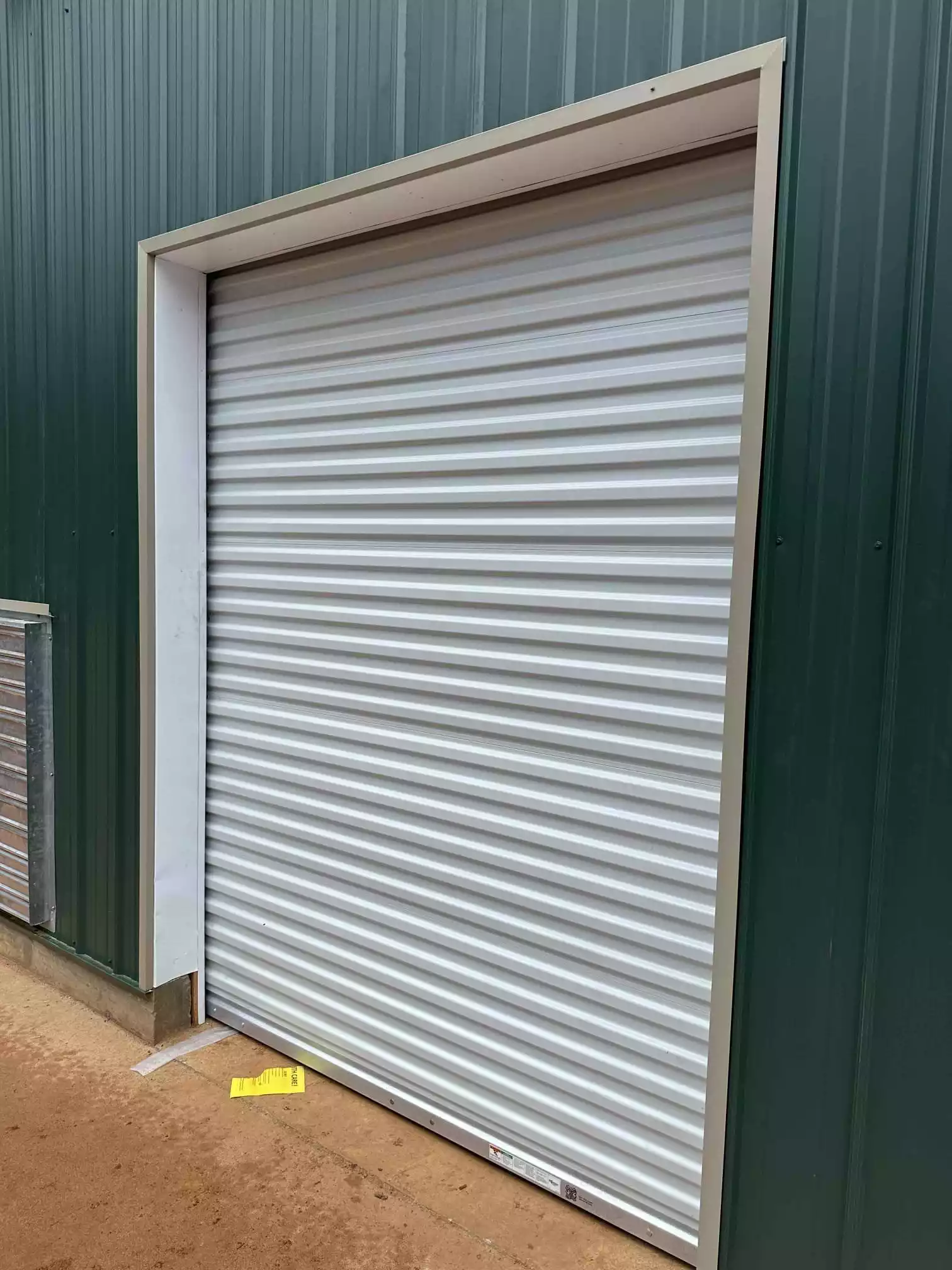
The primary and most obvious difference between a rolling sheet door and a rolling steel door lies in the curtain. Rolling sheet doors are made of corrugated steel sheets that are interlocked and seamed into a single curtain. Commonly, these sheets are 26-gauge and less durable but more cost-effective.
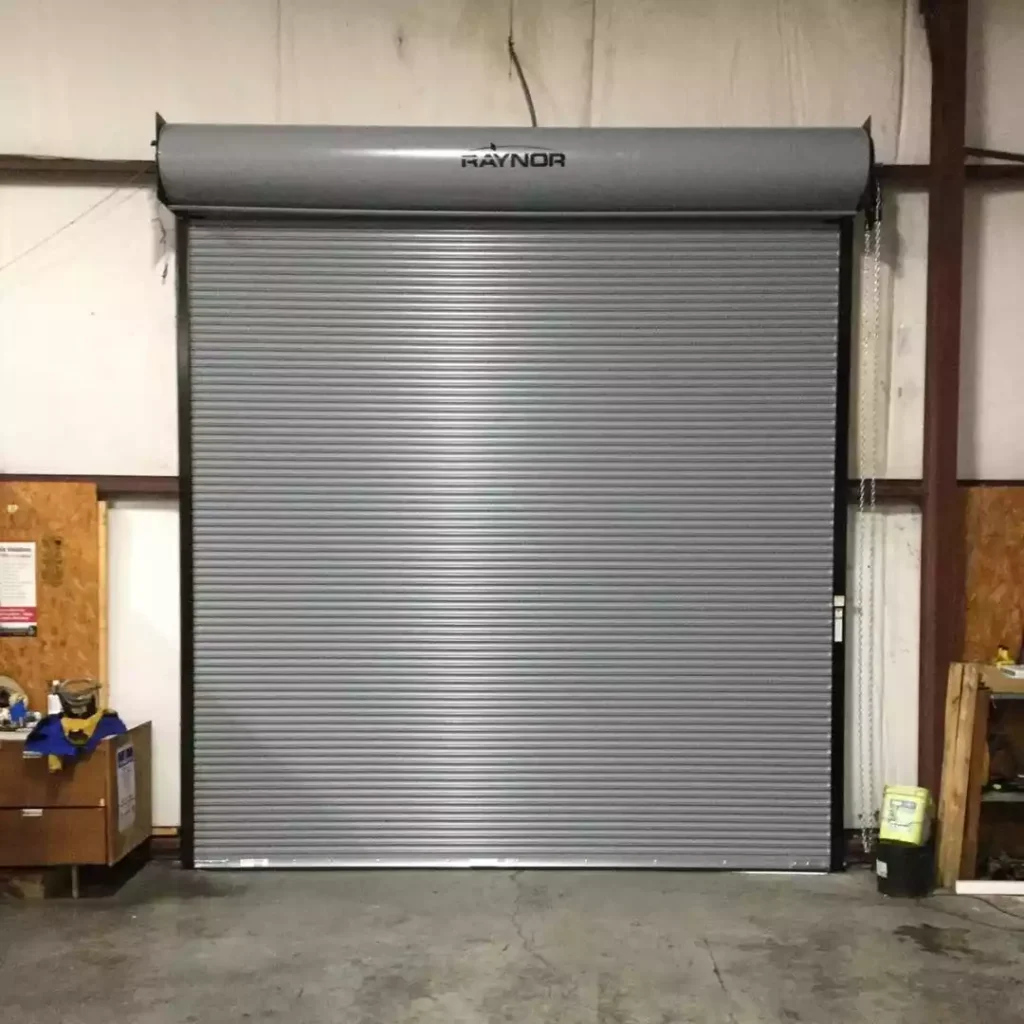
However, a rolling steel door is crafted using interlocking slats. These doors are commonly available in heavier gauges, such as 18, 20, and 22 gauge, depending on the model and the manufacturer.
The type of door that’s best suited for higher-traffic areas is a rolling steel door, since the individual panels can be replaced easily if they become damaged. If one of the sheets on a rolling sheet door becomes damaged, the entire sheet will likely need to be replaced.
Differences in Durability
Many people often state that rolling steel doors are stronger and more durable than rolling sheet doors, but it’s rare for individuals to know why. The interlocking slats are often the reasoning most business owners lean towards rolling steel doors for high-security areas, such as exterior openings, inventory rooms, or places with machinery or equipment. Rolling steel doors are more secure and can handle damage from daily use better than rolling sheet doors.
However, rolling sheet doors have their own advantages! These doors are perfect for lower security areas, such as interior hallways, storage units, or other internal security. Rolling sheet doors are also great for saving space, as they roll up above the door’s frame, saving you vertical headroom in your warehouse or commercial location.
Cycle Ratings
Cycle rating is an important thing to consider when choosing between a rolling sheet door and a rolling steel door. Essentially, a cycle rating is how often the door can complete a full cycle of opening and closing before it starts to show wear. Here are the average cycle ratings for rolling steel and rolling sheet doors:
- Rolling sheet doors have a cycle rating between 10,000 and 20,000 cycles. The minimum cycle rating for rolling sheet doors is 10,000, but many doors often outlast this.
- Rolling steel doors often come with the option for high-cycle springs, meaning that their cycle rating could reach as high as 100,000 cycles.
If your door moves dozens of times per day, then our experts here in Atlanta, GA can help you determine your annual cycle usage, and therefore, find the best door for your business. These rolling steel doors and rolling sheet doors often don’t wear down from being old. They wear down from how often they are used.
Wind and Pressure
While Atlanta, GA doesn’t get hurricanes all that often, we do have an occasional springtime storm that can lead to high winds and heavy rain. If your door acts as an exterior entryway, you might want to consider the windload qualities of your rolling door. While a door can seem sturdy, it’s best to look at the amount of wind and pressure these doors are capable of withstanding.
Rolling sheet doors often have a variety of windload design pressure options, ranging from 22 psf to 41 psf, depending on the configuration of the metals. Rolling steel doors often come with windlock (or endlock) options, meaning that they can normally automatically withstand 20 psf, or roughly 90 mph wind.
Overall, both rolling steel doors and rolling sheet doors can be crafted to withstand high winds and intense pressure, but you should always confirm with the manufacturer to ensure that your door is built to handle higher windloads.
Fire Ratings
Sometimes, buildings will require fire-rated doors to stay up to code and better protect your business. If your door is located within a wall that’s built to withstand or slow down fire, then you might need to consider a fire-rated door.
The building code, or IBC, will tell your builders whether or not you’re required to have a fire-rated door. Using the NFPA 80, you will be able to determine how your fire door should be installed and maintained.
Both rolling steel doors and rolling sheet doors can be manufactured to become fire-rated, though this is less common in rolling sheet doors. Many rolling steel doors can be manufactured with fire ratings ranging from 45 minutes to 4 hours of fire protection.
Rolling Sheet Doors Vs. Rolling Steel Doors: The Bottom Line
Now that you’ve heard more about the primary differences between rolling steel doors and rolling sheet doors, you are more than ready to make a decision that’s right for your business! Here’s a quick breakdown of those key differences:
Rolling Sheet Doors
- Curtain Material: Continuous corrugated sheet (commonly 26-gauge)
- Best For: Lighter-duty areas, lower security areas, self-storage units, and interior applications
- Cycle Expectations: Roughly 10,000 cycles minimum
- Wind Pressure: Can be crafted with pressure ratings
- Repairs: Dents in the sheet can cause the door to malfunction since the door is made up of a single sheet
- Fire-rated Options: Less common, though this varies by manufacturer
Rolling Steel Doors
- Curtain Material: Interlocking steel slats (often 22/20/18 gauge options)
- Best For: Warehouses, distribution centers, loading docks, manufacturing plants, and higher-security areas
- Cycle Expectations: Crafted for higher cycle usage, with some models engineered to last 100,000 cycles
- Wind Pressure: Built with windlocks to withstand roughly 90 mph wind
- Repairs: Singular slats can be replaced if damaged without the need to replace the entire door
- Fire-rated Options: Frequently offered with fire-rated options, with variability between manufacturers
Need a Rolling Sheet or Rolling Steel Door in Atlanta, GA?
If you’re interested in installing rolling steel doors and rolling sheet doors in Atlanta, GA, then our Aaron Dock & Door team is here for you! Our experts are ready to help you find the perfect door for your business, and then seamlessly install it for you.
Here’s what a recent customer of Aaron Dock & Door had to say about our rolling steel door services: “Great work and reasonable price. Jonathan the Tech was very knowledgeable and skilled. Answered all of my questions. I’ve used them twice and I recommend them.”
Schedule your rolling sheet or rolling steel door installation with our team today!